Thought you might to hear about the day children from the Eco-Aride Club and Baie Ste Anne Primary School came out to Aride. Thanks to one of the travel companie s out here, Masons, for the use of their catamaran, The Indiana, 23 children and their teachers came out to spend a day on the island.
 s out here, Masons, for the use of their catamaran, The Indiana, 23 children and their teachers came out to spend a day on the island.
With Aride being one of the islands a little more remote and further away from Praslin, school trips can sometimes be a little harder to initiate, which makes them very special when the children do get the opportunity.
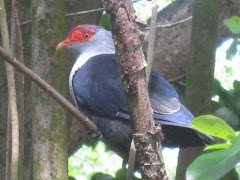
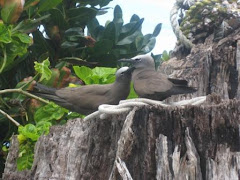
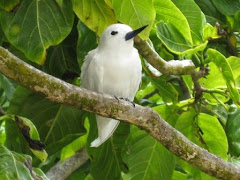
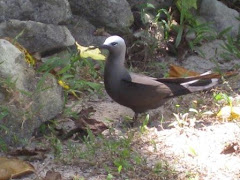
It was a busy day and great excitement for the children as they arrived on the Aride mooring after an hour and half boat trip on The Indiana. They were greeted by the Aride boat and staff and their adventur e on the island began, they became wildlife explorers for the day. Full of excitement and expectation the children had a whole day to see and enjoy Aride. They were able to experience the sights and sounds and to get close to wildlife, some of which they had never seen before. Wrights skinks and ghost grabs scurried around their feet, they got eye to eye with geckos that skulked on the trees along the trails, fairy ferns flew around their heads and tropic birds patiently looked up at their eager faces as they peered down at them. All their senses came in to play, as we smelt the fruits of the Indian mulberry tree, and listened to the sounds of the sooty terns and lesser noddys. We learnt about food chains, food webs, ecosystems, seed dispersal and much, much more.
 e on the island began, they became wildlife explorers for the day. Full of excitement and expectation the children had a whole day to see and enjoy Aride. They were able to experience the sights and sounds and to get close to wildlife, some of which they had never seen before. Wrights skinks and ghost grabs scurried around their feet, they got eye to eye with geckos that skulked on the trees along the trails, fairy ferns flew around their heads and tropic birds patiently looked up at their eager faces as they peered down at them. All their senses came in to play, as we smelt the fruits of the Indian mulberry tree, and listened to the sounds of the sooty terns and lesser noddys. We learnt about food chains, food webs, ecosystems, seed dispersal and much, much more.
There was also time for play, the banyan tree provided a swing, the beach and the sea a chance to cool down and exhaust any spare energy. We all had a super time and learnt lots and the children are now keen to write and tell you all about it and to share with you their exciting and very different day on Aride.