Saturday, 9 February 2008

Where do we get our water from?

Hi Classes 1 and 2, it sometimes seems funny that we are living on an island surrounded by water but we need to think about where we get our water for living from. Of course we are surrounded by the sea which is salt water and no good for drinking or washing. Luckily living on an island in a tropical climate, means it rains a lot more than back in Britain, and this we rely on.

We collect our drinking water off the roof of our house and store it in six big barrels. Before we do this, we need to make sure the roof is clean and all the bird pooh and leaves has been washed off. We can then drink and use this water for cooking, after it has been through a simple filter.

However it doesn’t rain all the time and so we need to make sure that we have stored enough during the two rainy seasons, and that we don’t waste our drinking supplies.

For all washing; ourselves, dishes and clothes, we have a well. The water from the well is slightly salty, which is no good for drinking but ok for washing. The well is 5metres deep and we use a bucket on a piece of rope to reach the water. The rope has knots in it so that we can grip it well and pull the bucket up when it is full and heavy. This water we then carry to our house in our own buckets, where we use it, we haven’t got a shower, sink or washing machine, so everything is washed by hand.

Not having a permanent supply of water or running water out of a tap and having too carry it from a well, really makes us think about how much water we use and encourages us to economical with every drop. This is important when living on an island to ensure that we don’t run out before it rains again.

Friday, 1 February 2008

A tour round our plantation bungalow

Located just off the beach crest, our plantation bungalow doesn’t have many similarities to anything we have lived in the UK, but is well suited for here and this hot climate. Originally built in the 1930’s to house people that worked on Aride when it was a coconut plantation. They are made of granite from the island, combined with cement, on top of a concrete plinth with tin roofs. The concrete plinth helps to raise the rooms up to stop some of the wildlife (and may be water) coming in. There are limited mod cons, with electric from a generator, but no running water or toilet.

The kitchen has a gas cooker and electric fridge, (the latter is essential in this hot climate), but no sink or drainer and the cupboards are basic, but built to keep the mice out. We have a few shelves for storage, but only for items that can’t be broken into by mice, birds, lizards, ants and crabs.

Off the kitchen there are two verandas, one for washing up and storing drinking water, the other is our main living space, where we eat and relax in the evenings.


Behind the kitchen there is a large room which is our personal office and storage room for tools, snorkelling kit, fishing gear and all other possessions. There are no windows in this room, so we have decorated it in bright white, to help us see with the dim lights here in the evening.


The bedroom is just big enough for a bed and one cupboard and chest of drawers. The bed has to be in the middle of the room so that we don’t get wet through the leaky roof when we have a tropical storm.

We try to keep all our clothes hung, why do you think we do that?
Please excuse the pink sheets – they were all we could find here – but they do brighten up the room!
The legs of the table we eat off and of our bed are all stood in tubs of water – why do you think this is??
Around the bed there is a large net, do you know what this is for?


In this picture, there is also a coconut shell with a coil on top which you light, what do you think this does?


Then there is the bathroom, well this is a bit of a grand name for a room with a whole in the wall to take dirty water! As we don’t have running water there isn’t a bath, shower or sink and definitely no toilet. To shower we fill a bucket from the well and pour it over or heads, often adding a kettle full of warm water first, as it can be a bit chilly.


Sunday, 27 January 2008

Class 4 imagined that they were Sally or Melv and wrote entries for their diaries. Here are some extracts from the diaries:

Sally
This evening we went to Praslin to go shopping. There is no chocolate and no crisps. I am finding it hard to adjust, but I know the longer I stay here I will get used to it and I must because this is a once in a lifetime trip and I can’t forget a moment of this two year experience. India*


PS. Today it was a staggering 30 degrees and I couldn’t go anywhere without my giant, floppy sunhat. In my opinion, I think I don’t look stunning. Jade*

I quite miss having chocolate or a bag of crisps because the shops don’t have them either. I suppose it means I’m healthier but still, I’m a big fan of chocolate! Abigail*


We do like our home because all the animals live with us and we have company everywhere we go. Gemma*

I went to bed because I was tired but I couldn’t get to sleep because of the waves and also I think because there are tons of spiders. It’s not just me who’s sleeping in my room! Rebecca*

When we wake up in the morning, we can hear all of the different kinds of bird gently singing in the breeze but at night most of the time some of the creepy crawlies come in our room an scare me out of my pyjamas!! It’s really scary. Katie*

Melv
Today I went fishing. I caught a whopper. I can’t describe it. We fish with a cane. There are no fishing rods here. Connor*

It looks nothing like Somerset. It is very hot. You could fry an egg on the floor. Luke M*


I love it here despite the heat. I am going to take a walk in the forest son because there is plenty of shade and space. Anyway, I love this place and I’m trying to have as much fun as possible because this is a once in a lifetime opportunity. I’ve always wanted to come to an island like this and here I am now. Ben I*


Life here is a breeze. The sun heals my worries and refreshes my mind. Hayden*


Everyday I think I’m back in the rainy England but then I open the door and the sun’s rays beat against my face and then it hits me, I’m in the SUNNY SEYCHELLES.

Saturday, 26 January 2008

Hi to Class 1 & 2 of Meare School from the Seychelles

The Seychelles are over 7,000 miles away and it is a country made up of 115 small islands. Melvyn and I came over to work here last December swapping our nature reserves in Somerset for a nature reserve called Aride Island. Aride is an island which is smaller than the village of Meare, with only eight people living on it, Melvyn and me, two volunteers and 4 local rangers.


Our job here is to look after the island and its wildlife, the wildlife is very special and is some of the rarest in the world. There are birds, turtles, lizards, crabs, fish, snakes and spiders, all living on and around Aride.


For us, living on Aride island can be quite hard work, there is no electricity or running water and of course no shops. We carry our water from a well and have a generator for electricity. We don’t have cars or bicycles as there are no roads and we go shopping once a week in a boat, as long as the sea is not too rough.

We live in a house, which we share with some of the wildlife like lizards and crabs, it is next to the beach and we can hear the waves when we go to sleep, there is a garden where we grow our food and we catch fish from the sea.

Wednesday, 16 January 2008

Hi Class 4,

Well we have finally arrived in the Seychelles and have now been living on Aride Island for the last 6 weeks, it is fantastic and there is so much to share with you, I almost don’t know where to start!

So what I will do first is show where we are living on the island and then hopefully you can start to visualise what things look like when I talk about our day to day living, our work and then of course the wildlife.


As you know the Seychelles are made up of a series of islands, there are two main ones – Mahe, which has a population of 90,000 and Praslin (in the picture on the left) which has 7,000 people.


Aride Island (picture right), is north of Praslin and has a human population of 8, but a bird population of up to 1.25 million. It is only 70ha in size (1,500m x 350m) and is right in the middle of the Indian Ocean.
The island is made up of 3 main areas:

The beach, which is a mix of sand and rocks and is about 750m long, and runs along the southern edge.

The plateau, which is next to the beach, and is our only flat piece of ground approximately 750m by 70m, this is where we all live. The plateau is where all the houses are, there are a total of 7, 1 for the wardens, 1 for the volunteers, 4 for the local rangers and 1 for visiting researchers and scientists. Also on the plateau is the well for our water, the garden, where we grow our food, the boat house for the boats to be kept out of the heat and the sun, and the Conservation Centre which is where we have the office and a visitors centre and shop for the tourists.

The hill, which forms the main part of the island, it is a rocky outcrop north of the plateau and very rugged. This is where most of the birds live, although the plateau is used by a lot of wildlife, the hill apparently becomes alive later in the year as most of the birds use this area to breed. The hill is 134m high and is a very steep climb in the Seychelles climate which is very hot and humid.


So where do we live? Well we are very lucky and we live right next to the beach (see arrow) and the noise of the sea is constant. When we go to sleep we can hear the waves crashing onto the beach and sometimes they are so loud it sounds like a thunderstorm echoing through the windows and doors.

There are lots of things to tell you over the next few months about how different life is on an island in the Seychelles, but to start with the things that spring to mind are:

We go shopping in a speed boat to Praslin to small shops which very often have a poor selection of food – certainly no crisps or chocolate and most of the time no onions or potatoes. This is not just the case for food, Melv couldn’t find a mirror to have a shave for 6 weeks and the one he has now got is yellow with a big teddy bear on the back – but don’t tell anybody!

With no television or radio our entertainment in an evening is watching skinks, geckos and crabs.

Washing is great fun and all our water comes either from the well or off the roof and our shower is a bucket over our heads.

The weather is very, very hot and 30’C most days, and so we go now where without factor 50 sun cream and big floppy hats. The climate is also very humid and our clothes don’t ever really dry out.

I will finish by saying you were all right about the wildlife a night, we share our house with lots of creatures...

Tuesday, 13 November 2007

Some thoughts from Class 4 - How will life on the tropical island of Aride be different for Sally & Melvyn?

It will be a lot healthier:

  • No junk food
  • No chocolate or sweets
  • Healthy diet, with a lot of fish and fruit to eat
  • To be at one with nature and see lots of wildlife
  • Live next to the sea and be able to go swimming

It will be more sustainable, but life will be harder:

  • No electric – so no television
  • No running water and no showers
  • Living in a wooden hut with no proper house
  • Nature coming into the hut
  • Not having normal luxuries, like an English cup of tea
  • Have to make camp fires to cook food
  • No shops on the island

What might the problems be?

  • Keeping in touch with family and friends could be difficult
  • Big spiders and biting insects
  • Poisonous plants
  • Hard work
  • Have to make your own entertainment, so might get bored
  • Catching enough fish and growing enough vegetables to eat
  • Getting sun burnt
  • Not having fresh, running water
  • No normal morning and afternoon routines
  • Smelly toilets

Would the children swop places – how might they feel?

  • Would be sad to leave family, friends and pets, may feel homesick
  • Lonely as not many people on the island
  • Excited, happy, nervous and worried
  • Would enjoy the warm weather
  • Would miss chocolate, junk food and television
  • Would feel out of touch, without television & news papers


Friday, 2 November 2007

So where is Aride and why is it so special?

The Seychelles’ islands of which there are 115, were created many millennia ago, when India broke away from Africa somewhere close to Madagascar, and drifted across the Indian Ocean, leaving the granite fragments of the Seychelles in its wake.

Aride is the northernmost island of the granitic Seychelles, roughly 68hectares in area, approximately 1.6km long by 0.6km wide. However despite its small size, it is home to one of the most important seabirds populations in the Indian Ocean. It is the finest nature reserve of the granitic Seychelles and a conservationists’ paradise. Eighteen species of native birds (including five only found in Seychelles) breed on Aride, this is far more than on any other granitic island.

The island is leased and managed as a nature reserve by the Island conservation Society (ICS) of Seychelles, but owned by the Royal Society of wildlife Trusts, a UK based charity since 1973. The whole island is been protected by Seychelles law as a nature reserve. Nature is the top priority, and the only human inhabitants are the reserve’s staff, currently four Seychellois rangers and two island wardens.


The Wildlife
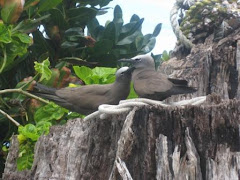
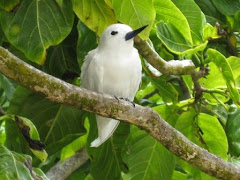
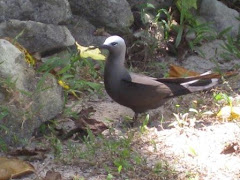
Over 1.25 million seabirds regularly breed on Aride, including the world’s largest colony of lesser noddies, the worlds only hilltop colony of sooty terns and the Indian Oceans largest colony of roseate terns. The island hosts the world’s largest colony of Audubon’s shearwaters and what is thought to be the world’s largest colony of white-tailed tropic birds. There are also very large breeding numbers of brown noddies, fairy terns, wedge-tailed shearwaters and a few pairs of red-tailed tropic birds.

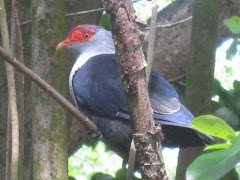
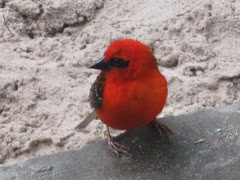
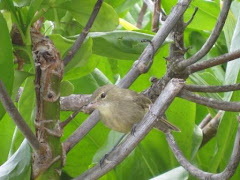
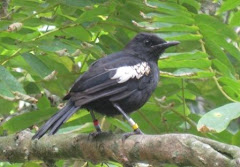
There has been several successful translocations of endangered or restricted-range endemic bird species onto Aride, these include the Seychelles warbler, Seychelles fody and the Seychelles magpie robin. The Seychelles blue pigeon and the Seychelles sunbird have re-colonised Aride naturally.

Aride has the world’s highest density of lizards, with other reptiles such as skinks, geckos and harmless snakes. Two species of marine turtles regularly nest on the beaches, the green and hawksbill turtles.

The reserve boundary includes 200m of surrounding seas, including a beautiful coral reef, with over 450 species of fish, from whale sharks to flying fish!!